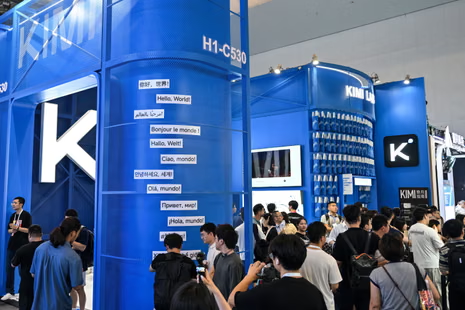
Washington, D.C. — China’s rapid progress in artificial intelligence, semiconductor manufacturing, electric vehicles, and next-generation communications is reshaping the global technology landscape, sending shockwaves through Silicon Valley and prompting urgent policy discussions in Washington.
Over the past several years, Chinese technology firms have accelerated innovation across industries once dominated by American companies. Breakthroughs in AI models, affordable electric vehicles, advanced battery technology, and telecommunications infrastructure have intensified competition, raising concerns about the United States’ ability to maintain its technological leadership.
In Silicon Valley, executives and investors are closely watching China’s growing influence. Technology companies face increasing pressure to innovate more quickly while competing against firms that can often bring products to market at lower costs. Venture capital firms are also reassessing investment strategies as Chinese startups emerge as serious global competitors.
Meanwhile, the White House has responded with a series of initiatives aimed at strengthening domestic manufacturing, supporting semiconductor production, and increasing investment in artificial intelligence research. Policymakers argue that maintaining America’s technological edge is essential for both economic growth and national security.
Trade restrictions and export controls have become central elements of U.S. strategy. The administration has expanded limits on the export of advanced semiconductor technology and high-performance AI chips to China, while encouraging domestic production through government incentives. Officials say these measures are intended to protect critical technologies from strategic competitors.
China, however, has accelerated efforts to achieve greater technological self-sufficiency. Government-backed investment programs and private-sector innovation have fueled rapid growth in chip design, robotics, renewable energy, and AI development. Chinese officials maintain that technological progress is vital to economic modernization and global competitiveness.
The rivalry extends beyond economics. Analysts note that leadership in emerging technologies increasingly influences military capabilities, cybersecurity, global supply chains, and international standards. As a result, technology has become a defining feature of geopolitical competition between the world’s two largest economies.
Industry experts caution that while competition can drive innovation, escalating tensions may also disrupt global supply chains, increase costs for consumers, and complicate international collaboration on scientific research and emerging technologies.
Despite ongoing trade disputes and regulatory barriers, both nations remain deeply interconnected through global markets and technology ecosystems. Many multinational companies continue to rely on manufacturing, research, and consumer markets in both countries, highlighting the complexity of efforts to reduce technological dependence.
As the race for technological leadership intensifies, businesses, governments, and investors worldwide are preparing for a future in which innovation is increasingly shaped by strategic competition between Washington and Beijing. Whether this rivalry results in greater global innovation or deeper economic fragmentation remains one of the defining questions of the coming decade.